A forex broker gives retail traders access to currency markets, but the phrase covers several different business models. One company may quote its own prices and act as principal to customer trades, another may route orders to external liquidity providers, while a third can combine both approaches depending on the client, position and current market exposure. Labels such as ECN, STP, market maker and no dealing desk are useful starting points, but they should not be treated as regulated quality grades.
This is important because broker marketing tends to present execution models as though one is automatically good and another automatically bad. An ECN label can sound institutional and transparent, while market maker can sound as though the broker is sitting across the desk hoping every customer loses. Reality is less theatrical. A regulated market maker can provide good pricing and reliable execution, while a poorly supervised company advertising “true ECN” conditions can still create withdrawal, pricing or counterparty problems.
The broker should therefore be judged on several connected issues: who regulates the exact legal entity holding the account, how orders are executed, total trading costs, slippage, financing, platform reliability, withdrawal procedures and whether the account fits the trader’s strategy. Broker type matters, but it is one part of the decision rather than a substitute for due diligence.
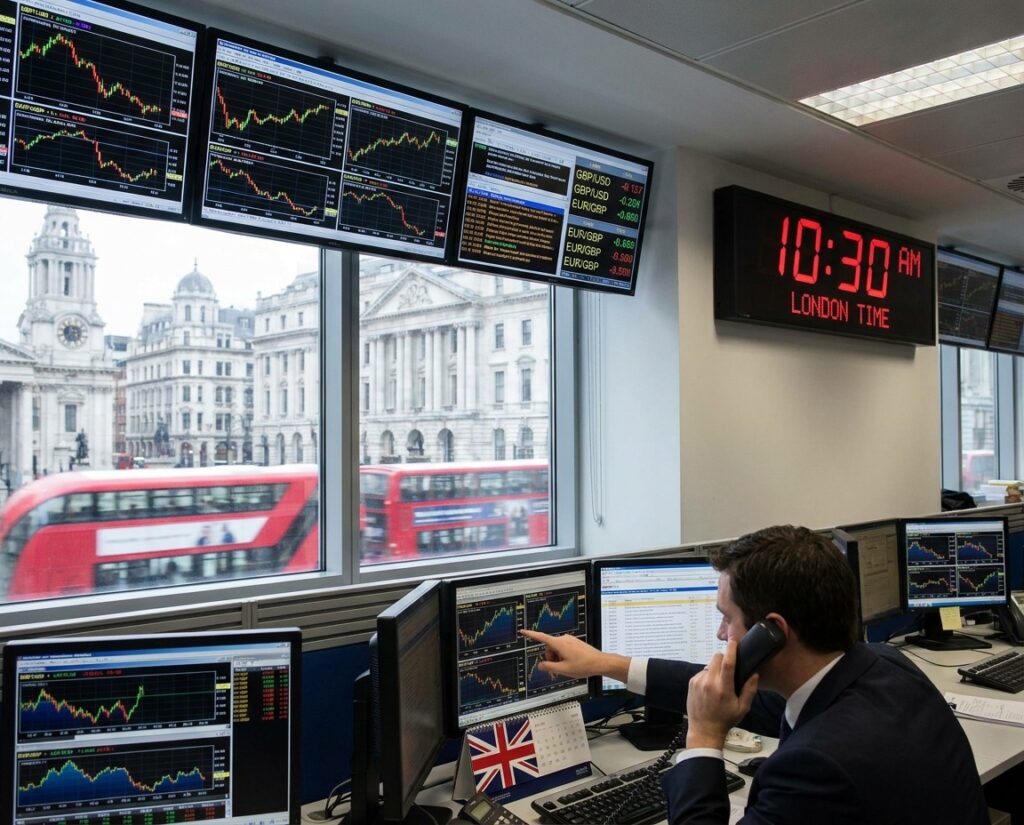
What Does a Forex Broker Actually Do?
Retail traders generally cannot participate in institutional foreign exchange markets on the same terms as major banks and investment firms. The forex broker provides the account, trading software, price feed, leverage, margin calculations and order infrastructure needed to take smaller speculative positions. Depending on the business model, the broker can also become the counterparty to the transaction or route exposure toward banks, non-bank market makers and other liquidity providers.
The legal structure is particularly important in over the counter forex. The US Commodity Futures Trading Commission explains that retail OTC forex customers normally trade against their dealer rather than on one central public exchange. When the customer buys, the dealer is the seller; when the customer sells, the dealer is the buyer. The CFTC’s retail forex advisory consequently recommends checking registration, disciplinary history, funding rules and withdrawal conditions before depositing money.
Other jurisdictions can structure retail forex through CFDs, rolling spot contracts or related derivatives, but the underlying lesson remains useful. The trading platform is only the visible part of the relationship. The account agreement determines which company owes the customer money, what regulatory rules apply and how an order moves from the trading screen into the broker’s risk and execution system.
The Main Types of Forex Broker
Forex brokers are commonly divided into market makers, STP brokers and ECN brokers. Traders will also encounter terms such as dealing desk, no dealing desk, DMA, agency execution, raw spread and hybrid execution. These categories overlap considerably, and there is no universal industry rule forcing every broker using the same marketing term to operate in exactly the same way.
A dealing desk or market maker generally provides its own executable prices to customers and can act as principal to the trade. An STP broker is usually described as routing orders or resulting exposure to external liquidity providers using straight-through processing. An ECN model attempts to connect orders with a broader electronic pool of participants and liquidity providers. A hybrid broker can internalise some flow while externally hedging other positions.
Retail broker comparison can therefore start with these broad categories, but the execution policy and legal terms are more useful than the label on the account page. Traders who want to compare actual providers can review ForexBrokersOnline.com alongside regulator databases and the brokers’ own legal documents. The comparison site can narrow the field; official registers and account terms should establish who is actually providing the service.
Market Maker and Dealing Desk Brokers
A market maker quotes buying and selling prices to clients and is generally prepared to act as the other side of the customer’s trade. If the trader buys EUR/USD, the contractual position can initially sit against the broker. That creates an obvious potential conflict because the customer’s loss can contribute to the broker’s trading result if the exposure remains internal rather than being hedged externally.
It would nevertheless be wrong to assume that every market maker simply keeps every client position and waits for customers to lose. Brokers manage exposure at portfolio level. They can offset long and short customer positions against each other, hedge net risk with external counterparties or vary how much exposure they retain according to internal risk limits. The trader sees one EUR/USD position, while the broker may be managing thousands of customer positions and one net currency exposure.
Market making can provide some practical benefits. The broker controls its own liquidity and can support very small trade sizes, simplified commission structures and relatively predictable execution under normal conditions. Some market makers offer spread-only accounts where the trading charge is built mainly into the bid and ask difference rather than invoiced as a separate commission.
The potential disadvantages are conflicts, price construction and execution quality. Because the provider controls the retail price feed, traders need confidence that pricing remains fair and that stop execution, slippage and rejected orders are handled appropriately. Regulation and execution policy matter more here than advertising language.
Being the Counterparty Does Not Automatically Make a Broker Bad
Retail traders sometimes treat the phrase “broker trades against you” as proof of misconduct. That is too broad. A dealer can legally be the contractual counterparty while operating under substantial regulatory requirements concerning pricing, capital, client treatment and order execution. The important question is whether the broker manages the resulting conflict fairly rather than whether the conflict exists at all.
The FCA’s current best execution rules require regulated firms executing retail orders to consider the total result for the customer, including price and execution costs. For OTC products, firms must also check the fairness of prices using relevant market data and, where possible, comparisons with similar products. The FCA Handbook on best execution therefore focuses on customer outcomes rather than assuming one particular broker business model is inherently acceptable or unacceptable.
A regulated market maker offering consistently competitive spreads, transparent execution and fast withdrawals may be preferable to an offshore company advertising “institutional ECN” without meaningful supervision. Broker structure should affect the questions a trader asks. It should not replace the answers.
This distinction matters particularly for beginners because market maker accounts can sometimes offer smaller minimum position sizes and simpler pricing. Those characteristics can be useful while a trader is learning. The danger lies in assuming simple pricing means the account is cheap or that a familiar platform proves the underlying company is trustworthy.
What Is an STP Forex Broker?
STP stands for Straight-Through Processing. In retail forex marketing, the term generally describes a broker that passes customer orders or resulting exposure to external liquidity providers rather than routinely warehousing the entire position internally. Those liquidity providers can include banks, larger dealers and non-bank market makers.
An STP broker can receive several available prices and select the best quotation under its routing system. The broker may then add a markup to the spread before displaying the price to the retail customer. Another STP account can combine narrower spreads with an explicit commission. This means “STP” does not tell the trader exactly what a transaction costs. Pricing still has to be measured using the complete spread, commission and expected slippage.
The attraction is that external routing can reduce the direct conflict associated with a broker retaining customer exposure. It can also provide access to competitive liquidity when several counterparties are contributing prices. The disadvantage is that execution depends on the external liquidity available at the time. Fast markets can produce slippage, wider spreads or partial fills rather than the smooth fixed-price experience some market makers attempt to provide.
An STP label should therefore prompt another question: straight through to whom? A broker saying orders are routed externally should explain its execution approach, pricing and whether it can still act as principal under the customer agreement.
STP Does Not Necessarily Mean Pure Agency Execution
The marketing definition of STP often becomes cleaner than the legal reality. A broker can automatically hedge or route customer exposure while still being the contractual counterparty to the retail trade. The customer may therefore have a contract with the broker even though the broker immediately places an offsetting position with an external liquidity provider.
This distinction matters because retail traders often assume that an STP broker simply forwards an order unchanged into an institutional market and disappears from the transaction. In practice, the broker still maintains the customer account, sets margin requirements, processes deposits and withdrawals, calculates profits and losses and may determine which liquidity source receives the hedge.
There is nothing inherently problematic about this arrangement. The issue is that the trader should not infer more from “STP” than the broker’s legal and execution documents actually promise. Automated routing can reduce one type of conflict without transforming a retail OTC trade into an exchange-traded order.
A useful comparison should therefore focus on realised spreads, slippage, rejected orders, commissions and regulation rather than awarding points merely because three letters appear beside the account name.
What Is an ECN Forex Broker?
ECN stands for Electronic Communication Network. In its more precise sense, an ECN brings together bids and offers from multiple market participants so orders can interact with available liquidity electronically. Retail brokers using an ECN-style structure commonly advertise raw or near-raw spreads and charge a separate commission rather than building their entire revenue into a wider spread.
This can suit active traders because separating spread from commission makes pricing relatively easy to analyse. EUR/USD might occasionally show an extremely narrow raw spread while the trader pays a fixed amount per lot or per side. The true cost is still the spread plus the full round-trip commission and any slippage. A 0.0 pip quote is therefore not free trading.
ECN execution can also expose the trader more directly to changing liquidity. Spreads can become very tight when competing prices are abundant and widen sharply around economic announcements or periods of stress. Orders can receive positive or negative slippage because the available market price can change between order submission and execution.
For traders comparing account types, the attraction is not that ECN magically improves forecasting. It is that a genuinely competitive liquidity pool can provide efficient execution for strategies sensitive to spreads and transaction costs.
The Problem With the Term “ECN”
ECN has become a marketing term as much as a technical description. Some retail brokers use phrases such as ECN account, ECN pricing or ECN-style execution without placing every customer order directly into one identifiable electronic communications network. Another broker can aggregate several external liquidity providers and describe the resulting account as ECN even though the infrastructure looks closer to sophisticated STP.
This does not automatically make the broker misleading. Retail foreign exchange does not have one global regulator defining ECN account in a way that forces every company in every jurisdiction to use the term identically. The problem arises when customers assume the label guarantees agency execution, zero conflicts or institutional market access.
A better approach is to ask what happens after the order is submitted. Does the broker act as principal? Which liquidity sources are used? Can customer orders interact with external liquidity? Is depth-of-market information meaningful or simply a display? What commissions apply to entry and exit? How is slippage handled?
The account’s execution policy normally provides more useful evidence than the word ECN printed on the pricing page. “True ECN” is not a regulatory status.
Raw Spread Accounts Are Not Automatically ECN Accounts
Raw spread pricing and ECN execution are often marketed together, but they describe different things. Raw spread tells the trader something about how the visible price is presented. ECN describes a claimed execution structure.
A broker can offer institutional or near-institutional prices from external liquidity providers, pass those spreads through with very little markup and charge a commission separately. That creates the familiar raw account. Another broker might provide similar pricing while using a different routing or hedging structure.
The trader should therefore compare raw accounts using total cost rather than branding. If EUR/USD averages 0.2 pips and the round-trip commission equates to another 0.7 pips, the practical cost is close to 0.9 pips before slippage. A commission-free account averaging 1.0 pip is only marginally more expensive under those conditions.
Scalpers and high-frequency retail strategies can care considerably about that difference because it repeats many times. A swing trader targeting 250 pips may barely notice it compared with overnight financing.
The best account structure depends on how the account will actually be used.
No Dealing Desk Brokers
“No dealing desk,” usually shortened to NDD, is another term that sounds more definitive than it is. In retail forex marketing it normally means customer orders are handled electronically without manual intervention from a traditional dealing desk and are commonly routed or hedged using external liquidity.
Modern technology makes this distinction less dramatic than it once was. Market makers can also automate almost every part of execution, while STP and ECN brokers can maintain risk systems controlling where flow is sent. The absence of a person manually approving each trade does not tell the customer whether the broker is the contractual counterparty or whether exposure is retained internally.
NDD should therefore be viewed as an operational description rather than a regulatory guarantee. A broker can advertise no dealing desk while still operating an OTC derivative model where the customer has a bilateral contract with that firm.
The practical questions remain familiar: what is the average spread, how is slippage handled, what percentage of orders are rejected, what happens during major news and who regulates the entity?
Removing the dealing desk from the slogan does not remove counterparty risk from the account.
Direct Market Access and DMA Forex
Direct Market Access is another phrase traders encounter when moving toward professional or institutionally oriented accounts. In conventional exchange trading, DMA has a relatively clear meaning because an order can be routed directly into an exchange or trading venue. Spot foreign exchange is more fragmented, so retail “DMA forex” requires greater care when interpreting the term.
A DMA-style forex service can provide prices and liquidity sourced from external counterparties while allowing the trader’s order to interact more directly with that liquidity. Some CFD providers also use DMA terminology where customer exposure is linked closely to underlying market execution. The trader can receive greater transparency and potentially narrower pricing, but the account can require larger minimum trade sizes or more sophisticated order handling.
DMA is most relevant to traders who genuinely need advanced execution rather than beginners choosing between two small retail accounts. A trader placing modest swing positions is unlikely to gain much simply from having another institutional-sounding acronym.
As with ECN, the legal agreement and execution policy matter more than the label. Direct access to liquidity does not mean direct ownership of a currency market position or eliminate the broker’s contractual role.
Hybrid Brokers and the A-Book/B-Book Model
Many large retail forex firms are hybrids rather than pure examples of one textbook broker type. They can internalise some customer flow and externally hedge other exposure. The terms A-book and B-book are commonly used to describe parts of this risk-management process.
A-book usually refers to exposure passed or hedged externally with liquidity providers. B-book commonly refers to customer risk retained internally by the broker. A hybrid can decide how much net market exposure to hedge based on customer positioning, portfolio risk, market conditions and its own capital limits.
Retail traders sometimes interpret B-book as proof that the broker manipulates prices because customer losses can benefit the dealer. That conclusion goes too far. Internalising flow is a recognised dealing model. Mispricing, abusive execution or obstructing withdrawals are separate conduct issues.
The more useful concern is how the conflict is controlled. Strong regulation, fair pricing, transparent execution policies and effective complaints procedures matter precisely because principal dealing creates incentives that need supervision.
A broker can operate a hybrid model responsibly. Another can advertise external execution while behaving poorly. The label alone does not settle the question.
Regulation Should Come Before Broker Type
A regulated market maker is normally easier to assess than an unregulated ECN broker because the first company operates inside an identifiable legal framework. Regulators can impose capital rules, conduct standards, disclosure requirements and supervisory obligations that have nothing to do with whether the marketing department prefers the letters ECN or STP.
In the UK, traders can use the FCA Firm Checker to confirm whether a firm is authorised and has permission to provide the relevant service. The FCA warns that using an authorised firm does not remove investment risk, but it materially improves the chance that applicable consumer protections will exist if something goes wrong.
US traders should verify retail forex firms through CFTC and NFA records. The NFA describes its BASIC system as a database containing registration, membership, disciplinary and certain financial information about retail forex firms and associated persons. Its investor resources provide access to those checks.
The equivalent principle applies elsewhere: identify the regulator first, then verify the exact legal company rather than relying on a licence logo shown on the broker’s own site.
The Exact Legal Entity Matters
Large broker groups often operate several regulated companies. One brand can have a UK company, European company, Australian company and offshore subsidiary, each with separate account agreements. The website and platform may look almost identical while leverage, compensation arrangements, negative balance protection and dispute procedures differ.
This is why “Broker X is regulated” is incomplete. The relevant statement is that a named legal entity is regulated by a named authority for particular activities. A customer registered under another company in the same group does not automatically inherit those protections.
The account-opening process should reveal which company will hold the trading relationship. Traders should read the legal name in the customer agreement and compare it with the regulator’s database before funding the account. If the site advertises several prestigious regulators but the customer contract belongs to a company in another jurisdiction, the group-level licences do not answer the question.
This check is particularly important when brokers offer higher leverage through an offshore subsidiary. The additional margin flexibility often exists because another regulatory regime applies.
Broker selection is therefore partly corporate due diligence, even when the trading interface makes the process look as simple as installing an app.
Spreads and Commissions
Spread is the difference between the bid and ask prices available to the customer. A broker can earn revenue by widening that difference relative to its underlying liquidity, charging a commission or using a combination of both.
Market maker accounts frequently emphasise commission-free trading, although the charge is then commonly embedded in the spread. STP accounts may mark up external prices, charge commission or do both. ECN-style raw accounts usually advertise narrower spreads accompanied by a separate commission. None of these models is automatically cheapest.
The correct comparison is the average all-in cost for the currency pairs and trading hours the strategy actually uses. Minimum spreads are poor evidence because a broker can advertise EUR/USD “from 0.0” even if that price appears only briefly during ideal conditions.
Commission also needs to be understood on a round-trip basis. A fee quoted per side is charged when opening and again when closing. Traders comparing an ECN commission with a spread-only account should convert both into the same unit, usually pips or cash cost per standard lot.
Small differences become important only when they occur often enough to matter.
Execution Quality Matters as Much as Headline Spread
A broker quoting a narrow spread can still be expensive if orders regularly experience adverse slippage. Conversely, a broker with a slightly wider displayed spread can produce a better final result if execution is reliable and the quoted liquidity remains available when the trader needs it.
This is especially important for scalping, news trading and automated strategies. A system targeting three or four pips has little tolerance for an extra pip of slippage. A swing strategy pursuing a 300-pip movement is much less sensitive to tiny differences at entry.
Best execution regulation recognises that price cannot be considered alone. Under UK rules, retail execution is assessed through total consideration, incorporating the instrument price and costs directly associated with execution. Speed and likelihood of execution can also matter where they contribute to the best result. The FCA best execution rules describe these obligations in detail.
Traders should therefore pay attention to live performance rather than broker advertising. Spreads, commission, slippage and rejected orders collectively determine what the strategy actually pays.
Requotes, Slippage and Market Orders
Requotes occur when the broker cannot or will not execute an order at the requested price and returns another price for acceptance. Modern market-execution accounts often avoid traditional requotes, but that does not mean the requested price is guaranteed. The order can instead fill at the best available price, producing slippage.
Slippage is not automatically suspicious. Foreign exchange prices move continuously, and available liquidity can change between order submission and execution. Positive slippage is possible as well as negative slippage. A broker that claims market execution but systematically passes adverse changes to customers while retaining favourable changes deserves more scrutiny than one where outcomes genuinely move both ways.
News releases create the hardest conditions. Spreads can widen sharply and liquidity visible immediately before the announcement can vanish. An ECN or STP structure cannot manufacture counterparties willing to trade at yesterday’s spread during a violent repricing.
The useful question is therefore not whether a broker promises zero slippage. That promise itself would deserve examination. Traders should ask whether execution behaves fairly under comparable market conditions and whether the broker explains how orders are handled when prices move quickly.
Swap Rates and Overnight Financing
A broker that looks cheap for day trading can become expensive for swing trading because overnight financing is a separate cost from the spread. Currency positions held through the daily rollover can receive debits or credits based on interest-rate relationships, broker adjustments and the exact contract structure.
Swap rates can vary substantially between brokers even when their visible spreads are similar. A trader holding EUR/USD for ten minutes may never care. Somebody keeping a position for three weeks can discover that financing has become one of the largest costs in the trade.
The calculation should therefore be checked before choosing a broker for swing or position trading. Some accounts advertise swap-free conditions, but eligibility, alternative administration charges and holding-period restrictions can vary. Marketing language should not replace the actual fee schedule.
Long-term traders should also compare leveraged forex with futures or other structures where carrying costs are reflected differently. The cheapest broker for one strategy is not necessarily the cheapest broker for another.
This is why broker comparisons should start with expected trading behaviour rather than one generic score.
Choosing a Broker for Scalping
Scalpers should place execution quality and total transaction cost near the top of the comparison. Raw spread ECN or STP-style accounts can be attractive because a strategy taking many small profits benefits from narrow pricing, even after explicit commissions are included.
The account still needs enough real liquidity at the sizes being traded. A broker advertising 0.0 pips is of little use if the trader repeatedly receives worse fills when sending market orders. Platform latency, server stability and restrictions on rapid trading or automated strategies can also matter.
Scalpers should therefore test the broker under the hours they intend to trade rather than judging performance from quiet-market screenshots. The London and New York overlap can behave very differently from late-session conditions, while major economic releases can produce an entirely different liquidity profile.
A genuinely good scalping broker is not simply the company with the word ECN in the account name. It is the company where spread, commission and realised execution leave enough of the strategy’s statistical edge after repeated trades.
For active UK traders comparing available choices, brokers recommended by ForexBrokersOnline.com provide one research starting point, but the relevant legal entity and live trading costs should still be verified independently.
Choosing a Broker for Swing Trading
Swing traders have somewhat different priorities because positions remain open for several days or weeks. Saving 0.2 pips at entry is useful but can matter far less than financing charges accumulated over the life of the trade.
Stable execution, reliable stop handling and reasonable rollover costs therefore become more important. The broker also needs enough market coverage for the strategy. Someone trading major forex pairs may need little beyond EUR/USD, GBP/USD and USD/JPY, while a macro trader can want broader access to crosses, commodities and equity indices through the same account.
A dealing desk or market maker is not automatically unsuitable for swing trading. The longer target distance makes extremely tight raw spreads less important, and a well-regulated provider offering predictable execution can be perfectly practical. STP or ECN accounts may still appeal where the trader prefers commission-based pricing or external liquidity.
The choice should follow the economics of the strategy. Paying a higher commission to obtain a microscopic spread provides little benefit if positions are held for two weeks and the main cost is overnight financing.
Choosing a Broker for Beginners
Beginners often benefit more from clear pricing, modest minimum position sizes and strong regulation than from sophisticated execution terminology. A trader learning how position sizing and stop orders work does not need institutional-style market depth if the account encourages taking positions far larger than their capital can reasonably support.
Market maker accounts can sometimes work well here because they frequently provide simple spread-based pricing and very small trade sizes. STP accounts can offer similar accessibility. The decisive factor should be whether the trader can control exposure cheaply while learning rather than whether the broker claims one superior routing model.
Demo trading is useful for learning platform mechanics, although it cannot fully reproduce live slippage or the psychological effects of losing real money. A small live account can then reveal how actual orders, funding and withdrawals work without making early mistakes unnecessarily expensive.
The broker should also make risk information easy to find. If the website spends far more space advertising leverage and bonuses than explaining margin and losses, the promotional priorities are fairly obvious.
Beginners need fewer ways to increase exposure, not more.
Automated and Algorithmic Traders
Automated strategies add another set of broker requirements. The platform must support the technology being used, whether that is MetaTrader Expert Advisors, cTrader automation, an API or another environment. Server uptime, order latency and restrictions on automated activity can be more important than educational material or mobile-app design.
Execution model also matters because some algorithms depend heavily on very short-lived prices. A strategy tested using ideal bid and ask data can fail when live orders experience slippage, variable spreads and network delay. ECN and STP-style accounts are often preferred for this reason, but the label is less important than the measured execution.
Algorithmic traders should examine whether the broker permits the intended strategy, including scalping, high order frequency and hedging where relevant. They should also know what happens when the connection fails. A stop stored only inside the trader’s software provides different protection from an order accepted and held by the broker.
Testing with small size under real conditions remains important. A strategy that works perfectly in a backtest has not yet tested the broker.
Platforms Should Come After Regulation and Cost
MetaTrader 4, MetaTrader 5, cTrader and proprietary platforms can all provide capable trading environments. Platform preference matters because a trader spends substantial time using the software, but it should not be allowed to override regulation and account economics.
The same MetaTrader interface can be offered by a highly regulated firm and an obscure offshore company. MetaTrader itself does not guarantee the solvency or behaviour of the broker connected to it. Likewise, a polished proprietary mobile app proves that somebody employed competent developers, not that withdrawals will be processed promptly.
Platform choice becomes most important once the financial company has passed the basic due-diligence checks. Traders can then compare charting, order types, automation, depth of market, mobile functionality and reliability.
Order execution should also be understood separately from software. Pressing Buy in MT5 does not mean every broker routes the resulting order in the same way. The platform sends the instruction into the broker’s execution infrastructure, where the firm’s own business model takes over.
The screen can be identical while the transaction behind it is completely different.
Deposits and Withdrawals Matter More Than Promotions
Broker research often concentrates on what happens while money is being traded and spends surprisingly little time on how that money enters and leaves the account. Funding methods, processing times, conversion fees and withdrawal restrictions should be checked before the first deposit rather than after a profitable month.
The CFTC specifically warns that fraudulent offshore forex dealers have refused withdrawals while demanding invented taxes, additional deposits or account upgrades. Its consumer advisory advises customers to understand withdrawal procedures and charges before funding an OTC forex account.
A legitimate broker can still require identity checks and comply with anti-money-laundering rules. Those requirements are not unusual. Problems arise when withdrawal conditions appear only after the customer requests money or when the broker demands new investment funds simply to release an existing balance.
Small initial withdrawals can be a useful operational test, although they do not guarantee future behaviour. Regulation and the legal entity remain more reliable indicators.
The purpose of trading profit is eventually to become money the trader can actually use. Withdrawal quality is therefore part of execution quality in the broader sense.
Offshore Forex Brokers
Offshore brokers can offer leverage, products or account conditions unavailable under stricter domestic regulation. For an experienced trader who deliberately keeps position size constant, higher leverage can reduce the amount of idle cash that needs to remain with one broker. That is a rational capital-efficiency argument and is different from using extra leverage to multiply market exposure.
The cost is regulatory risk. Client-money treatment, negative balance protection, complaint procedures and capital requirements can differ considerably. An offshore subsidiary can share branding with a well-regulated company while remaining a separate legal entity under another set of rules.
The CFTC warns US customers that many forex fraud complaints involve unregistered offshore dealers, while the FCA similarly advises UK consumers to verify the exact company through official records rather than trusting claims of authorisation. The FCA forex scam guidance specifically warns that scam firms can pretend to be UK based or copy the identity of genuine authorised businesses.
Offshore does not automatically mean fraudulent. It does mean the trader needs to understand what protections have been exchanged for the more flexible account.
Clone Firms and Fake Broker Regulation
Regulatory verification needs to go further than searching a company name. Clone firms copy genuine broker names, registration numbers and office addresses, then replace the website, telephone number or payment instructions with their own.
The FCA therefore recommends contacting firms using details obtained from the regulator’s own records rather than the information supplied in an unsolicited message. Its Warning List contains firms and individuals known to be operating without appropriate UK authorisation, although absence from the list is not proof that a new company is legitimate.
This is particularly relevant to forex because the industry already contains many legitimate companies with international names and several subsidiaries. A fraudulent website can exploit that complexity by claiming to be the Australian, European or offshore division of a genuine broker.
The account’s legal entity, regulatory record and website details should therefore agree with one another. If they do not, sending money before resolving the discrepancy is unnecessary risk.
Trading already contains enough uncertainty without adding uncertainty about whether the broker exists.
There Is No Universally Best Broker Type
A market maker can be suitable for one trader and unsuitable for another. An ECN-style raw account can save a scalper substantial money while offering almost no practical advantage to a low-frequency swing trader. An STP broker can provide a useful compromise between external liquidity and straightforward retail account conditions.
The largest mistake is treating these categories as quality rankings. ECN does not mean safe. Market maker does not mean dishonest. STP does not prove the broker never takes principal risk, and no dealing desk does not guarantee that a retail order is being passed untouched into a global interbank market.
The more dependable hierarchy begins elsewhere. Verify regulation and the legal entity, then examine execution policy, total transaction costs, financing, position sizes, withdrawal terms and platform suitability. Only then does the broker-type label become useful context.
A trader whose strategy loses two pips per trade before costs will not be rescued by finding a more impressive acronym. A trader with a genuine statistical edge can, however, lose that edge by choosing an account whose costs and execution are poorly matched to the method.
That is the point where broker selection becomes part of the strategy rather than an administrative task.